Warsaw
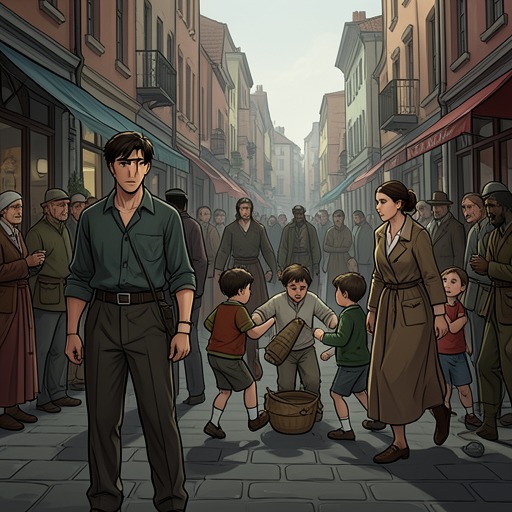
Promise at DawnWarsaw was the first westward stop in the narrator and his mother’s attempt to rebuild their lives after their remaining resources had been reduced to a few hundred zlotys. They chose it partly because she had friends and relatives there, but most decisively because she believed the city’s French lycée could keep her son oriented toward France. The plan brought them to a place of hard improvisation: they did not enter the school she had hoped for, and survival depended on her ability to turn small opportunities into income.
A Westward Refuge
With only a few hundred zlotys saved, mother and son decided to go first to Warsaw, which they regarded as a step west and therefore in the right direction. Her connections in the city offered a practical reason to choose it; the French lycée supplied the more decisive one. The school represented a possible continuation of the future she envisioned for her son, even though the family’s means could not ultimately secure his admission.
Precarious Life and Daily Care
In Warsaw, they lived in a succession of furnished rooms. Money sent irregularly by someone abroad kept them just able to stay alive, while his mother assembled a livelihood from whatever work she could find. She acted as a go-between in the precious-stones market, traded in furs and antiques, scouted for a real-estate firm, sold advertising space, and took on other jobs the narrator later could not recall precisely.
One of her ventures made necessity especially visible: through newspaper advertisements, she offered to buy used teeth containing gold or platinum. She soaked them in acid and examined them under a magnifying glass to verify the metal before reselling them at a profit. The work was resourceful rather than secure, part of the succession of efforts by which she tried to keep the household afloat.
Her care also took a dependable, intimate form. Every morning during the school recess at ten, she arrived with hot chocolate in a Thermos flask and slices of bread and butter. The regularity of that visit stands out against the uncertainty of the family’s finances and her shifting occupations: whatever else changed from one day to the next, she made sure he had food at school.
Schooling and Language
The hoped-for French lycée proved unaffordable, its fees far beyond the family’s means. For two years the narrator attended a Polish school instead. He learned the language fluently, and in later life described Polish as beautiful, named Mickiewicz among his favorite poets, and retained a tender attachment to Poland even while presenting himself as a Frenchman.
Five days a week he also traveled by tram to lessons with Monsieur Lucien Dieuleveut-Caulec, who taught him his maternal tongue. The failed lycée plan thus did not sever his connection to French; it produced a divided course of study, with Polish schooling alongside regular instruction in the language his mother wanted him to inherit.
The narrator later admitted that, when asked where he had studied in Warsaw, he claimed to have attended the French lycée. The school was not a fact of his education but a way of honoring his mother’s effort: he felt he should not deprive her of the fruit of her labor by giving the literal answer. In this small alteration of his own history, Warsaw’s thwarted educational hope became a lasting act of filial loyalty.
Home and Emotional Climate
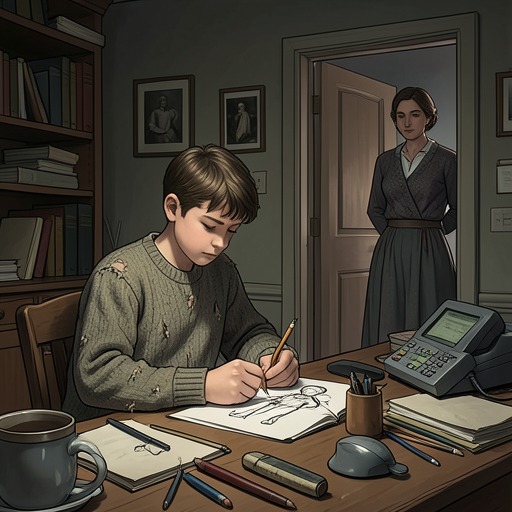
The recollection of his life in Warsaw also includes a night when the narrator came home distressed after turning his back on his enemies. He expected his mother to console him, but she met his account with silence and an expression that seemed to him almost hostile. She lit a cigarette, went about preparing supper in the kitchen shared with the flat’s owner, and made his bed without speaking.
She remained awake in a pale-green leather armchair until morning, surrounded by cigarette stubs. The narrator later imagined that she was wondering whether her sacrifices and hopes were worth the effort, and whether her son might eventually treat her as another man had treated her. In the morning she boiled his usual three eggs and made his chocolate; a faint tenderness returned as she watched him eat, before her hard expression came back when he prepared to leave for school. The episode places the strain of their circumstances inside the household: her care continued, but it existed alongside fear that her devotion might go unrewarded.
Significance
Warsaw is both a practical refuge and the site of a formative disappointment. The French school that had helped determine the journey remained beyond reach, yet the city gave the narrator Polish fluency and an enduring literary attachment to Poland. Its rooms and improvised businesses register the family’s precariousness; the Thermos flask, bread and butter, and daily lessons register the persistence of his mother’s care. His later claim to have attended the French lycée binds those experiences together, turning an educational failure into a private tribute to the effort that had brought him there.